“...And so, right before the arrival of dawn, Mama Tjowa took a bundle of the rice that her people brought with them from Africa, and carefully braided the grains in her hair. And then, they ran, far, far away from the plantation, tééé (until)... they arrived at a hidden place, deep in the forest, where a lot of trees had fallen.
...They burned the trees, Mama Tjowa loosened her hair, and shook the rice seeds on the ground. Some time later, rice seedlings grew from out of the fertile soil. Then, they took the harvest even further upriver, and did the same thing again. And today, we plant and eat from the same rice, that Mama Tjowa brought for us to survive.”
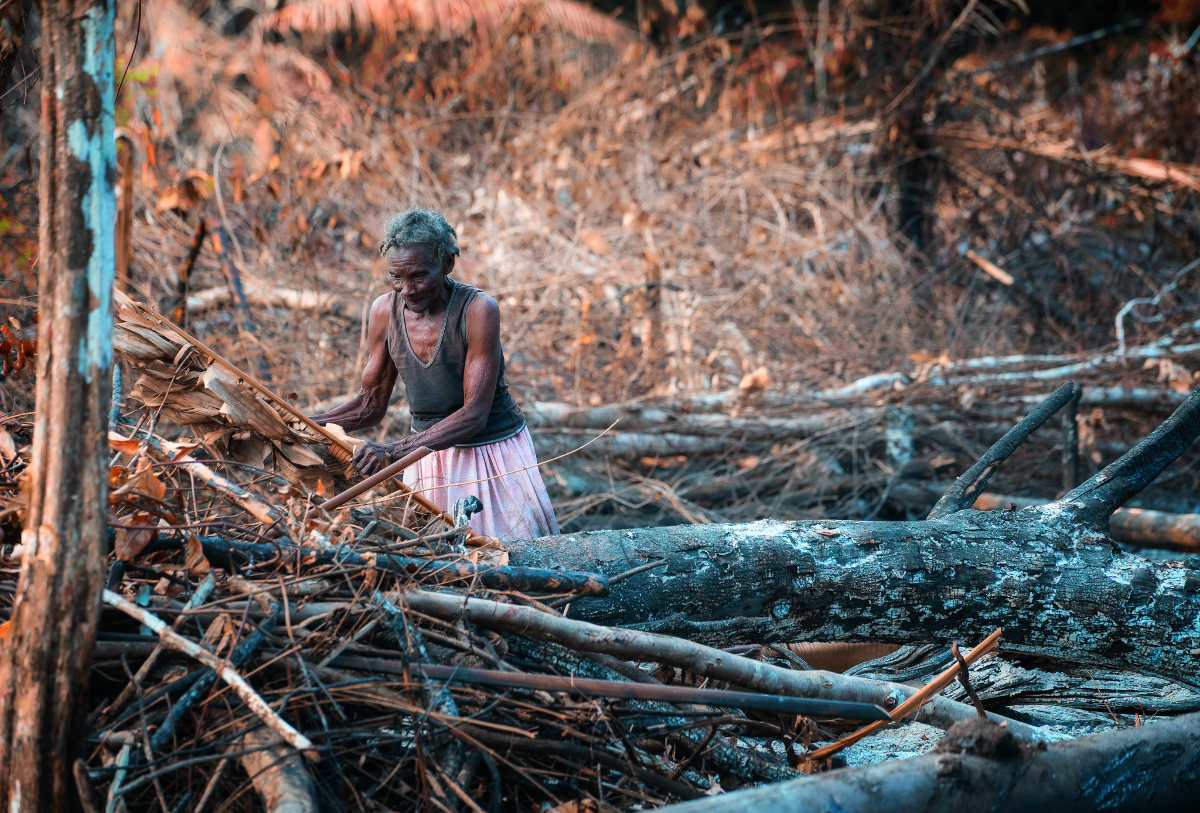
Deep in the Amazon rainforest of South America, reside a small community of Africans, whose ancestors escaped from slavery hundreds of years ago. They went on roving raids to liberate their brothers and sisters, and fought with the colonial army for their right to exist in peace.
They are the known as the Matawai Maroons.
This is their story.
Foreword: Maroons and oral history
By Tabué Nguma – Associate Project Officer, Social and Human Sciences Sector, UNESCO
Translated from French. Original text here.
With the awareness that the history and memory of slavery still continue to play a structuring role in multicultural societies today, and largely constitute the matrix of racial injustices which still victimize Africans and their descendants throughout the world, in 1994 UNESCO decided to launch the project The Slave Route: resistance, freedom, heritage. The initial objective of this multidisciplinary project was to "break the silence" on the tragedy of trafficking and slavery in the world, by casting light on their scale, their root causes, their challenges and their modalities of operation. The project aimed to highlight more concretely the global transformations and cultural interactions resulting from these constrained interactions, to promote scientific research on this theme, and to preserve the tangible and intangible cultural heritage associated with it.
Today the project focuses its efforts on delivering a new narrative that moves the gaze from the slavers to the “slaves” themselves. Indeed, until now, the methods of writing history have mainly focused on exploring the archives and traces left by slavers. Historians faced the paradoxical task of writing an objective history about the reality of the condition of millions of men and women who had been thrown into the violence of slavery, but only from the perspective of the executioner, through an understanding of his narration, and administrative and juridical context. Now, we are carrying out an ethical reversal, which in fact invites a new epistemology: namely, that of reinscribing in the writing of the history of slavery a strangely silent voice, that of these very men and women who have suffered from, but also resisted, this system which reduced them to the condition of “movable property”.
This new narrative, currently under development, is constructed from “new” materials, or better said, materials which had until recently held little interest for a certain historiographical tradition. Until now, the few recorded biographical accounts in existence have served as the primary support for this endeavor; but, the main material, which are the oral archives (testimonies, tales, songs, expressions, etc.) are still largely under-developed despite some promising work on subjects such as the formation of the Maroons.
Facing very similar ethical and epistemological issues in the 1960s in the process of rewriting African history from the perspective of Africans themselves, the Scientific Committee of the General History of Africa (composed of eminent historians such as Joseph Kizerbo or Cheick Anta Diop), or even the pioneering work of Jan Vansina, had largely cleared the ground by exposing the shortcomings of a Eurocentric methodological conception. The notion of archive had to be “decolonized”. This titanic work, which called for the rehabilitation of oral sources, prompted UNESCO to create two centers for the collection and processing of oral tradition, in West Africa (Niger) with the CELHTO (Center for the Linguistic and Historical Study by oral tradition), and in Central Africa (Cameroon) with CERDOTOLA (Regional Center for Research and Documentation on Oral Traditions and for the Development of African Languages).
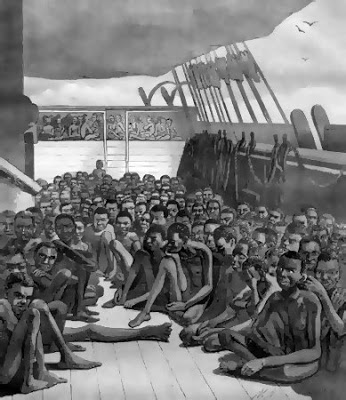
The overwhelming majority of “slaves”, as we know, did not have access to the written word, considered too dangerous by the slave settlers. Therefore, they left few graphic traces, with the exception of a few (auto) biographical accounts, the most famous of which may be that of Olaudah Equiano also known as Gustavus Vassa. In the case of the United States, the “accounts of slaves” fugitive before the Civil War and of former post-war slaves are essential to the study of American history and literature of the 18th and 19th centuries. As historical sources, these accounts document the life of the “slaves” mainly in the southern United States from a valuable perspective of lived experience. Increasingly in the 1840s and 1850s, they reveal the struggles of African Americans in the North, as fugitives from the South record the disparities between the ideal of freedom and the reality of racism in the so-called “free states”. As historical documents, these accounts chronicle the evolution of white supremacy in the South, from 18th century slavery to segregation and the denial of civil rights in the early 20th century. As an autobiography, these accounts give voice to generations of African-Americans who, although sidelined by the white literature of the South, have left us with a sense of the lives of human beings struggling for the recognition of their humanity and their dignity.
The colonial regime of recording, documentation and counting – sometimes for naive reasons of outright disinterest (“a slave is no more than a beast”), and sometimes for more strategic reasons of concealing the horror (the fear of being judged by history) – will by necessity only produce an indirect archive about the people put into slavery. When one is interested in the real living conditions or the social organization of the Maroon communities, the colonial archive is, so to speak, a desert.
This remarkable project Lands of Freedom: The oral history and cultural heritage of the Matawai Maroons in Suriname, developed by the Amazon Conservation Team, presents a wonderful opportunity to enrich our knowledge of the history of transatlantic slavery from the point of view of those communities which still represent, in their symbolic and material production, the collective realization of resistance to barbarism and the dehumanization of slavery. This project also echoes the recordings of former “slaves” of Voices Remembering Slavery: Freed People Tell their Stories, which took place between 1932 and 1975 in nine of the southern United States. Twenty-three people recounted their experiences of slavery and their hopes of men and women who achieved freedom after a long struggle. Several people also sung songs, many of which had been learned [by their ancestors] during the days of slavery. More recently, the history / memory project Passados Presentes, which explores memories of slavery and freedom in Brazil through the collaborative reconstruction of experiences, is part of a similar but broader dynamic: bringing communities into dialogue. Based on a fluid and dynamic conception of the archive, these three projects invite a new reflection on the uses of the past in the present, and the force of imaginations linked to race.

Telling this story for these communities also means continuing to resist the silences of history and re-establishing the value and the memory of these “untraceable” men and women in the colonial narrative.
Foreword: The role of oral tradition in re-shaping history
By Rita Tjien Fooh – Director, National Archives of Suriname
The Universal Declaration on Archives (adopted by the UNESCO on 10th November 2011) explicitly recognize the preservation of collective social memory as part of the human condition. Archival institutions all over the world are acquiring traditional (paper based) and nontraditional sources of information(electronic, audiovisual, oral history and oral tradition). In the case of the National Archives of Suriname, an oral history unit was established in 2008. Life stories from emigrants were recorded and managed by this unit. At an early stage we also recognized the absence of a written tradition under our indigenous and traditional people. Their history and life events of these people were not captured in our collection that was mostly paper based. In a society where a large part of its inhabitants have no written tradition, it's a responsibility of the heritage institutions to encourage and support every initiative and effort to safeguard and protect the intangible heritage of such a community.In this context it's worth mentioning that on the 5th of September 2017 Suriname join the 2003 UNESCO convention for safeguarding the Intangible Cultural Heritage (ICH). In the "Decree of 21 februari 2017, Approving the accession of the Republic of Suriname to the "Convention for the Safeguarding of the Intangible Cultural Heritage", Suriname explicitly states in the explanatory memorandum (memorie van toelichting) "that because of globalization there is an increasing need in society of knowledge about and perception of national identity. Groups and individuals are looking for anchor points to form and give meaning to questions such as: who are we, what binds us, which stories we tell and what meaning do they have in the light of the future. Intangible heritage provides such an anchor point. Cultural customs, traditions, traditional healing methods, traditional cultural expressions, stories, craft skills that collectively make us immaterial heritage are created over and over again and / or revalued and given a common meaning. The various Surinamese cultural expressions, history and works of art should be protected and preserved for the current and future generation".[i]
Since the history of the Matawai people is based on oral tradition where the re-collection of the past is transmitted from generation to generation, every effort to preserve these collective memory and traditional knowledge must be encouraged and supported by the Surinamese community. Archives record decisions, actions and memories [ii], but in the absence of a written tradition, in my opinion the oral tradition of a community - the narrations and memories of the past – are the unique and significant source for the people. Their cultural and spiritual identities are nurtured and embodied in their oral tradition and these can have an essential role in the development of their community.
Although written sources (archives) are available in libraries or archival institutions, these documents are often a reflection of the actions of the (colonial) government. The' voices' of the Matawai in these documents are often absent and silent. By recording the narrations and memories of the past and making it accessible to their own community, the people will be able to analyze the available written sources and the recorded narrations critically and in the end re-define (shape) their own history.
[i] DECREE of 21 februari 2017 no. 16, approving the accession of the Republic of Suriname to the "Convention for the Safeguarding of the Intangible Cultural Heritage". Link.
[ii] Universal Declaration on Archives adopted on 10th November 2011.
Video: Presentation by Maroon community members, October 9, 2020
On October 9th 2020, in association with Suriname's National Maroons Day, the Amazon Conservation Team (ACT) organized a presentation on this Storytelling Map for the Surinamese public, via Zoom. In this below part of the presentation, Rolien Sallons (Matawai) and Ramon Awenkina (Aukaner) discussed the contents of the storytelling map. This video features the English translation (by Jerrel Pinas, via Zoom).

For more Amazon Conservation Team Storytelling Maps, please visit our website at amazonteam.org.
Sources
Cover: photo from Edward C. Green papers, National Anthropological Archives, Smithsonian Institution (box 3).
Cartography and design by Rudo Kemper.